

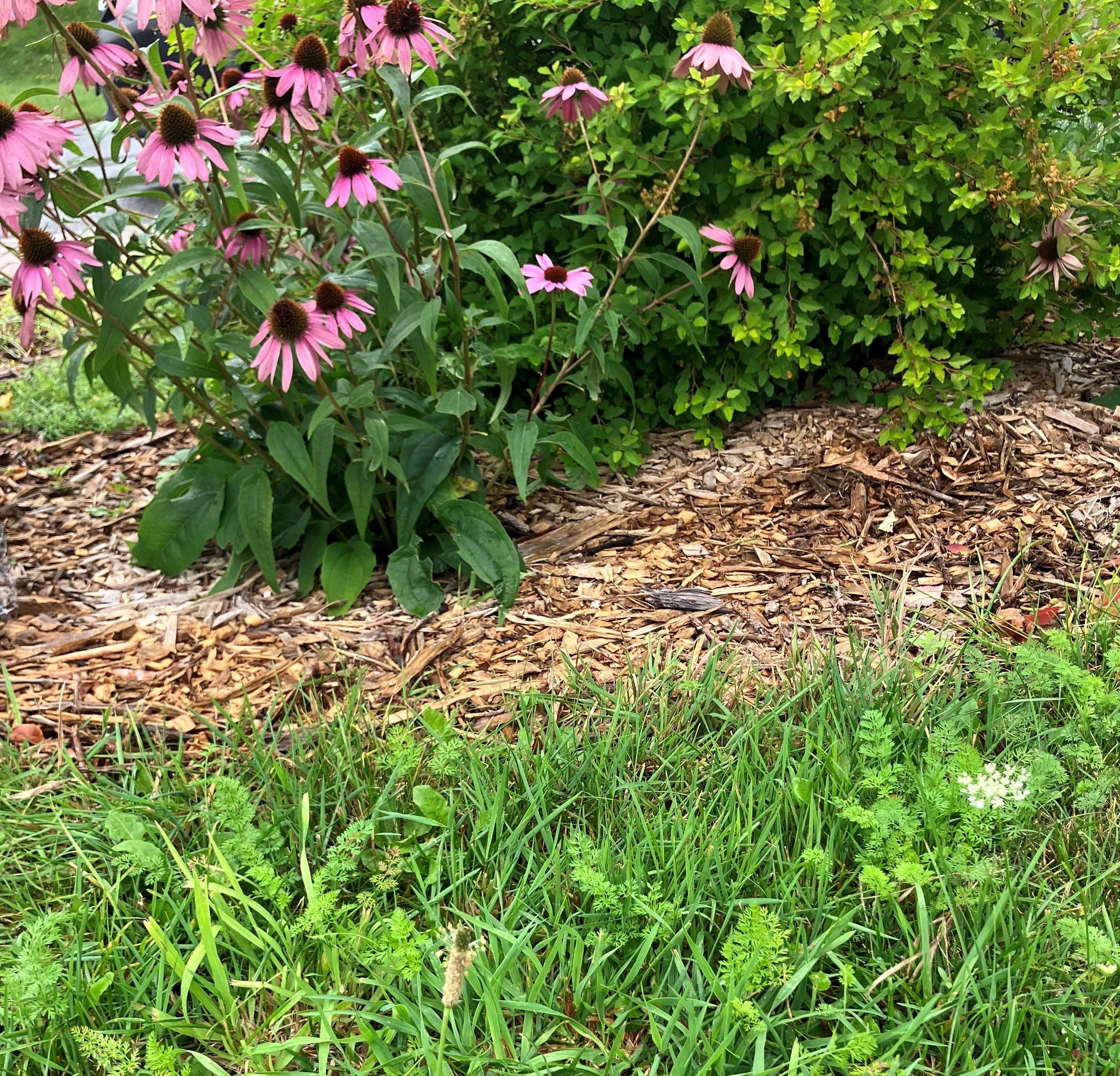
Council to vote on whether or not to move ahead with a “Naturalized Lawn Assessment Framework” to provide guidance to help bylaw enforcement officers differentiate between a naturalized yard/garden and land that has too tall grass and weeds, and invasive species.
At this Tuesday’ Council meeting, the Chief Administrative Officer is recommending the Council approve amendments to the City’s By-Law to Provide for Maintaining Land in a Clean and Clear Condition, passed in 2007 and amended in 2024. The bylaw sets property standards for private property and yards.
The staff proposal is to add definitions to the bylaw for “naturalized gardens” and “vegetative growth” and change the definition of “turfgrass”. A new section is intended to ensure “that vegetative growth on the grounds, yard or vacant land does not create conditions that harbour or contribute to an infestation of rodents or vermin.”
As well, the motion directs staff to prepare and “implement” a Naturalized Lawn Assessment Framework to “support consistent enforcement, including consideration of intentional design, ongoing maintenance, invasive or prohibited vegetation, sightlines, access and egress, fire hazards, pest harborage and adverse impacts on neighbouring properties.” (page 2, Report 26-185)
Ironically, the approach being proposed to Council risks dragging the City into legal battles that have been going on in other municipalities, most recently in Napanee. (See, for example, a report on the Napanee issue in the Waterloo Record.)
Joyce Hostyn, a member of 1000 Islands Master Gardeners, says that “We’re going backwards.” She believes that “Kingston’s 2024 bylaw is already one of the best in Canada.”
Hostyn adds that “this amendment adds a rodent clause with no science behind it. Vegetation doesn't attract rats. Food waste does. The definition for a naturalized garden would protect an intentionally planted invasive garden but not a spontaneously recovering native one.”
Tuesday’s staff report claims that “The City of Kingston has experienced an increasing number of complaints regarding long grass, unmanaged vegetation, and properties that residents identify as naturalized lawns.” There are no data to accompany this statement in the report.
The City has not held any public meetings or invited comment through Get Involved Kingston on the proposed new definitions or the idea of a Naturalized Lawn Assessment Framework to use for enforcement purposes. Instead “staff considered public feedback received through routine service requests, Councillor inquiries, and interactions with residents during enforcement investigations.” (page 9, Report 26-185)
The motion on Tuesday is also coming directly to Council without first going to the Administrative Policies Committee.
The reason for a staff review of property standards and their application to yards dates back to a November 18, 2025 Council motion by Councillors Hassan and Tozzo. The motion asked staff to improve public awareness and understanding of the City’s By-Laws and potential refinements to existing By-Laws to enhance property standards requirements, while ensuring the City does not become unnecessarily involved in private disputes between neighbours.” The motion passed unanimously and was followed by a staff report to Council in June. (June 2, 2026, Report 26-097)
Under the heading Public Expectation vs. Municipal Authority, the June report noted:
“A consistent theme in complaint analysis is that residents often interpret the City’s property standards by-laws as mechanisms to resolve:
• Aesthetic disagreements;
• Personal conflicts between neighbours;
• Lifestyle incompatibilities;
• Civil boundary or encroachment issues;
• Interpersonal tenant-landlord conflicts.” (page 6, Report 26-097)
Training is the best approach
Hostyn says that training staff about the role of various plants in the ecosystem and how to identify prohibited species is the better approach. “Complaints aren’t resolved by changing the bylaw. They’re resolved through education and communication. Residents and officers don’t know the difference between a native plant community, an ornamental garden full of invasive species, a yard being naturalized, and a neglected yard.”
The motion before Council does not address training.
City’s Financial Statement for 2025
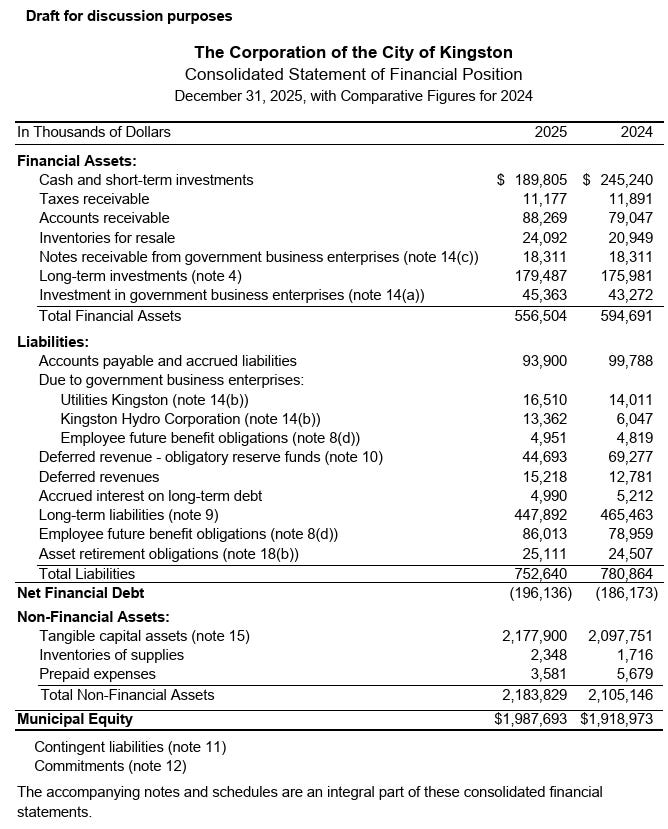
Tuesday’s Council agenda also has the City’s Consolidated Financial Statement for 2025. Below is the overview page of the 51-page report, showing approximately $38 million less in financial assets than in 2024 and an increase in the City’s liabilities from 2024 of almost $10 million.
Hostyn adds that “this amendment adds a rodent clause with no science behind it. Vegetation doesn't attract rats. Food waste does. The definition for a naturalized garden would protect an intentionally planted invasive garden but not a spontaneously recovering native one.”
Staff recommendation is .....
I support the 1000 Islands Master Gardeners. I hope Council will as well.